Contact Travex

Travex Travel and Tourism
32 Abdoun, Yanal Complex, Amman, Jordan PO Box 942294 Amman 11194 - Jordan
Tel: 009626-568-6848 Fax: 009626-5686847
www.travexe.com

Wednesday, March 12, 2008

Business in Aqaba


Aqaba Business Meetings
Aqaba’s hotels offer fully equipped meeting and conference rooms that cater to all business needs. Hold your meetings in Aqaba and grant your clients and employees access to an exceptional beach and city experience. 

Business Team Treat
Aqaba is also one of the popular employee incentive destinations. Treat your team for last year’s excellent performance.

Wednesday, February 20, 2008

Aqaba Attractions


Al Humayma
Follow history from the Nabatean to Islamic times. Al Humayma is situated midway between Aqaba and Petra.

Al Sharif Hussien Bin Ali  
Al Sharif Hussien Bin Ali is the leader of the Great Arab Revolt and the great-great grandfather of His Majesty King Abdulla II. He lived in this house for six months after the First World War. In its rooms, the house exhibits a collection of rifles, copper and silver bowls, coffee pots and mills, and mansaf trays ( Jordan’s traditional mutton and rice dish).

The Ruins of Ayla
Between the 7th and 11th centuries, Ayla was considered the “port of Palestine, the storehouse of Al Hijaz (Arabian Pinensula)”, and an important resting place for Egyptian pilgrims on their way to Mecca. Now, Ayla is located in the heart of Aqaba’s hotels district.

Aqaba Castle 
This Mamluk Fort, known as the Aqaba Castle, was built in the reign of Qansuah Al Ghuri (1510-17). The fort served as a caravanserai for pilgrims traveling to Mecca as well as a military site. This site overlooks the public beach.   

Experience Jordan
Travel across Jordan without leaving your comfortable motion seat and enjoy the Jordan Experience Show. Tip: This is more fun if you are with a group. Jordan Experience Show is featured in Aqaba Gateway.
 

Religion
Aqaba was always a city of religious and cultural tolerance and diversity. Go for a tour and visit the numerous Mosques and Churches around the city.

Tal Magass and Hujayrat Al-Ghuzlan
Tal Magass and Hujayrat Al-Ghuzlan sites contain important remains linking Aqaba to its metallurgical past. Excavations at these sites revealed human habitation dating back to 3700-3200 BC.

Purpose Church
The Purpose Church is the highlight of the Byzantine town of Aila that dates from the late 3rd or early 4th century and is thought to be the oldest known purpose-built church.

History Museum
The Aqaba Archeological Museum exhibits an interesting collection of coins, pottery, and artifacts from Iraq, Ethiopia, Egypt, and China and provides insight into the city’s long history as a trading center. Particularly remarkable, is the milestone of the Roman Via Nova Traiana with its inscription stating that the Emperor Trajan built the road from Syria to the Red Sea.

Aqaba's Bird Observation
Aqaba is on a bird migration route connecting three continents: Asia, Africa and Europe. More than 1.5 million birds cross Aqaba twice a year, presenting a great opportunity to see rare birds. The observatory hosts birds year-round, but if you are in Aqaba during the migration seasons (spring and autumn), you are in for a grand show.


Thursday, January 10, 2008

After Sun-Set in Aqaba


Beach Barbeque 
Aqaba Marine Park offers grill places, so bring the food and have the joy of preparing a meal for your family and friends on the beach.

Dining
There is a variety of quality restaurants in Aqaba whether traditional Mediterranean and Arabic foods or international, you can enjoy a different taste every meal.

Aqaba Events 
Aqaba regularly hosts international bands, singers, DJ’s, Opera shows, comedy shows, live music, traditional nights and many others. Don’t miss out, check the events calendar.

Night Cruise 
Night breeze, a freshly cooked dinner, and a beat to dance to all night long. This is a wonderful way to take in the Red Sea. Spending the night to wake up amidst the open water is a tempting option as well.

Party Out
Aqaba bars, pubs, and night clubs often host famous DJ and live music. Dance to oriental and international beats.

Aqaba Sheishah
Sheishah is locally known as Argeelah. Aqaba’s numerous coffee shops and terraces offer an assortment of Argeelah flavors to suit your taste: watermelon, apple, orange, lemon, or a fruit mix. Argeelah outings are one of the local’s favorite, especially over the weekend. 

Sunset Cruise
Be in the front row for a captivating view of the sun leisurely disappearing behind the mountains of Sinai. 

Take a Beach Stroll
Sea lovers will not get enough of the sea night breeze.  A walk in the peace of the night is trek for the soul. 


Beach Camp
Aqaba’s warm weather allows camping for a night or more on the beach most of the year. Aqaba Marine Park offers serviced camping area for tents and trailers for a small fee.

Beach Picnic 
This is a favorite for Aqaba locals, families take their home-cooked dinner and enjoy it to the sound of the gentle waves. Join the Aqabawi families for a sahra ala al shat (night on the beach).

Aqaba Parks and Gardens
Aqaba’s parks and gardens are scattered around the city and they offer benches and play grounds for the children. Why not take a walk or have a picnic with your family and friends at one of the parks. This is also a good chance to meet the friendly local families.

Moonlight Running  
Aqaba hosts an annual moonlit marathon. This is a great opportunity to see the city, compete, and possibly win a prize.

Aqaba Hantoor
A Hantoor (horse and carriage) is a pleasant way to see parts of Aqaba. So how about taking one to go around the city ans see its sights and sounds.

Wednesday, December 12, 2007

Aqaba Adventures


Aqaba Welcomes you
Aqaba is a fusion of history, nature, and city life surrounded by picturesque mountains and blue sea. Bathing in its year-long warm sun, Aqaba invites you to relax on its beaches, partake in the exhilaration of its water sports, and explore the coral reefs of the Red Sea, home to hundreds of different types of corals and sponges with their wealth of colored fish.


Aqaba Adventures

Diving
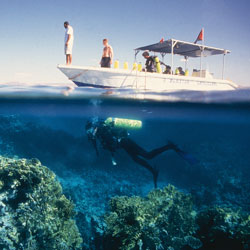
Whether your a professional or an amateur diver, you can go diving in over 20 diving spots with a variety of coral reefs, marine life, and interesting wrecks.  Some of these spots are accessible from the shore, others require a boat. Contact one of the diving centers.
Night diving! At night, the fish and corals take on a special beauty. This is suitable for professional divers.

Snorkeling 
You will be amazed by the colors and sea life you can see from the surface. Children can snorkel too, so bring them along. You can either rent or buy equipment at the Aqaba Marine Park gift shop, diving centers, or shops downtown.

Glass Boats
View the hidden treasures of the red sea from a glass bottom boat. Boats start their trips from the hotel beaches, the Aqaba Marine Park, and the public beach. This is a fun and exciting activity for all.

The Pharaoh's Island  
Go on a full day cruise to the Pharaoh’s Island in Egypt and visit Saladin Castle.

Acting  
Visit the Red Sea Institution for Cinematic Arts (RSICA), the “first and only accredited M.F.A in cinematic arts for the Middle East and North Africa Region”. RSICA hosts acting classes for the public on a weekly basis.


Fly Aqaba 
Have a bird’s eye view of Aqaba. You can hire an ultra light plane for 30 minutes over Aqaba, and can also extend your flight to Wadi Rum or Petra.
Take a family or a group tour in a Cessna 206 over Aqaba, Wadi Rum, or Petra. Five passengers are allowed per flight.

Go Fishing
The Aqabawi fishermen usually leave at dawn and have a tradition of playing music and telling stories about their adventures at sea, throughout the fishing trip.  However, fishing is restricted to certain spots on the north beach to protect Aqaba’s precious corals reefs and marine life.

Up The Mountains  
Aqaba’s mountains enclose a desert of hills and adventure, rent a buggy for 2 or 4 hours and have a moonlit adventure.

Water Sports 
From having fun on a banana boat or a ring with your friends, family, or partner. 
Take a canoe and pedal at your own speed, relax and enjoy the sun and view. 
Speed up: Jet Ski, water ski, or rent a speed boat with a professional driver or even catch the waves and wind surf. 
Soar above the sea and take a breath of excitement, try para-sailing alone or with a partner. 

Thursday, November 15, 2007

Aqaba


Aqaba is a fusion of history, nature, and city life surrounded by picturesque mountains and blue sea.

Bathing in its year-long warm sun, Aqaba invites you to relax on its beaches, partake in the exhilaration of its water sports, and explore the coral reefs of the Red Sea, home to hundreds of different types of corals and sponges with their wealth of brilliantly colored fish.

Around its quiet streets and between its modern structures, Aqaba holds special monuments with a rich history beginning in the Iron Age, and continuing across ancient civilizations, from the Edomites, Nabateans, Romans, and Byzantines to Muslims.

A blend of cultures and traditions, and a long history as a trading center are reflected in the warm welcome the city extends to all visitors.  But that is not all, the striking desert landscape of Wadi Rum and the Nabatean city of Petra, among the World’s Seven Wonders, are a short drive away.

Aqaba, with its excellent accommodation and entertainment options, is an ideal hub from which to explore these sites.

Wednesday, October 10, 2007

Mount Nebo


Mount Nebo is one of the most revered holy sites of Jordan, located 10 km west of the Roman Byzantine town of Madaba, for this is where Moses (pbuh) was buried. The site's association with the last days of Moses is described in moving words in Deuteromony (34:1-7). The episode of Balak and Balam (2:13-26) also took place here.

Mount Nebo is 817 meters (2,680 feet) above sea level, and thus more than 1km (0.6 mi) above the neighboring Dead Sea. It is a site holy to both Christians and Jews: Moses is said to have died on or near the mountain some time after God had showed him the Holy Land from its summit. 

You can still enjoy the prophet’s view today – gaze out over the sea lying under a saline haze, the ancient city of Jericho and, if you’re lucky, all the way to Jerusalem and Bethlehem. On Siyagha (one of the mountain’s twin peaks), you can see the remains of mosaics from a Byzantine monastery.

Wednesday, September 12, 2007

Wadi Rum


A journey to Wadi Rum is a journey to another world. A vast, silent place, timeless and starkly beautiful.. Wadi Rum is one of Jordan's main tourist attractions being the most stunning desertscape in the World, lying 320 km southwest of Amman, 120 km south of Petra, and only 68 km north of Aqaba.

Wadi Rum is a very spectacular desert resort  and very famous for its high mountains and pink sand.  A popular tourist attraction for those whom nature provokes them to explore it and its desert beauty. 

As a desert area, Wadi Rum has its unique characteristic as a remote and peaceful area. Because it's located in the desert, you will find numerous tourists camps, which offer tourists with the special Bedouin experience in the desert and give them the chance to sleep under the stars. 

Wednesday, August 15, 2007

Umm Qais

Umm Qais, situated 110 km north of Amman on a broad promontory 378 meters above sea level with a magnificent view over the Yarmouk River, the Golan Heights, and Lake Tiberias, this town was known as Gadara, one of the most brilliant ancient Greco-Roman cities of the Decapolis; and according to the Bible, the spot where Jesus (pbuh) cast out the Devil from two demoniacs (mad men) into a herd of pigs (Mathew 8:28-34)

The city reached its peak of prosperity in the 2nd century AD. New colonnaded streets, temples, theaters and baths sprouted. Meleagros compared Gadara with Athens, which testifies to the city's status as a creative center of Hellenism in the ancient Near East.

Umm Qais's charm still lingers today. A large portion of the western Roman Theater has survived history's upheavals. Vaulted passageway supports its rows of seats, built of hard basalt stones. A row of elaborately carved seats for dignitaries stand near the orchestra, and in the center was a large headless white marble statue of Tyche, goddess of fortune and of the city, now displayed at the local museum.

Across from the theater is the main colonnaded street (cardo), which was in all likelihood the town's commercial center. Also, near the black basalt theater is the Terrace, which hosts a courtyard, a church and a basilica. Further west of the Terrace and along the east-west colonnaded street (decumanus), ruins of the Nymphaeum, a bath complex and a well-preserved Roman Mausoleum can be seen. After a few hundred meters one can barely make out remains of what was once a Hippodrome.

Thursday, July 5, 2007

Umm Al Jimal

The provincial town of Umm al-Jimal, 50km northeast of Amman, was garrisoned by Roman soldiers from about 200 AD onward. This triggered an expansion of trade and commerce, until by 500 AD the town could boast a population of three or four thousand people. The precincts were gradually abandoned following the 7th century Arab conquest and 8th century earthquakes, although they were briefly re-occupied by the French Army in the 1920s, and by the Druze in the 1930s.

Little is known of pre-historical times in Umm el-Jimal, aside from few scattered remains of what appear to be settlements of wandering nomadic/hunting tribes. In some of these places it is possible to find chert napping stones and some prehistoric tools.

Tuesday, June 12, 2007

Al Shawbak


A twelfth century castle on the way to Petra, Shawbak enjoys a superb location in the midst of sharp rock ridges, well protected from any invading forces that might arrive. Nowadays the castle is in poor repair, but receives scarcely a visitor, despite its beautiful setting and the opportunities to walk alone through the imposing remains.

Although Karak grabs the headlines, Shobak Castle, a short way further south, was in fact the Crusaders’ headquarters in Jordan, and the first castle they built in the region. Known then as Montreal – or the Royal Mountain – Shobak dominates the folded, semi-arid hills on the approaches to Petra.
Shobak Castle was built in 1115 by King Baldwin I of Jerusalem to guard the road from Damascus to Egypt,and was the first of a string of similar strongholds in the Latin Kingdom of Jerusalem. The legacy of widescale rebuilding work in the 1290s, under Mamluke control, is everywhere, most notably in the carved stone panels adorning the external walls and towers, which feature strikingly beautiful Arabic callligraphy.

Roam the ruins to discover the original Crusader chapel, a palace complex and even a set of secret passages, one of which heads down a flight of steep and crumbling steps into blackness, eventually emerging through a small gateway at the base of the castle hill.

Thursday, May 10, 2007

Petra


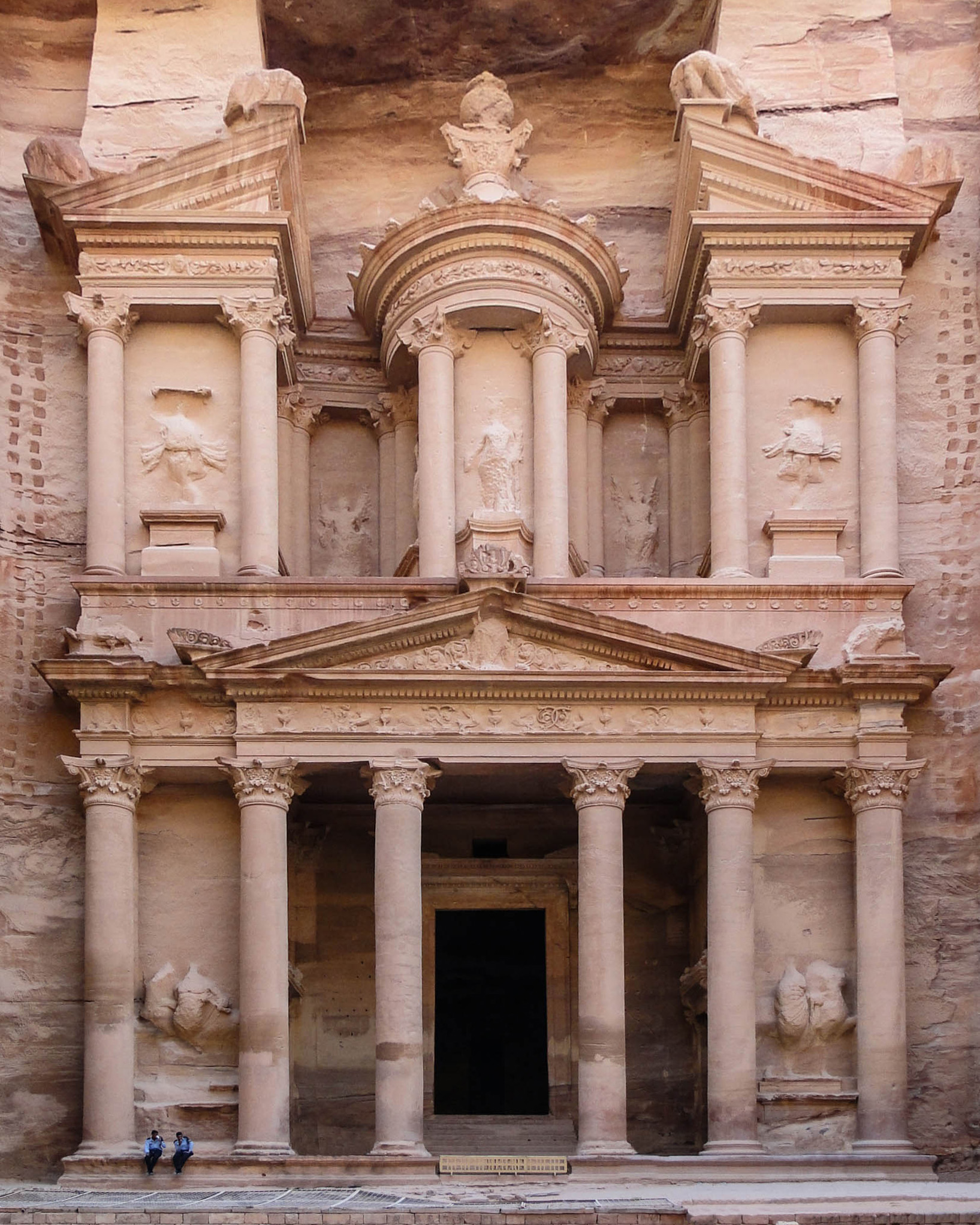
Petra (from the Latin word 'petrae', meaning 'rock') lies in a great rift valley east of Wadi 'Araba in Jordan about 80 kilometers south of the Dead Sea. It came into prominence in the late first century (BC) through the success of the spice trade. The city was the principal city of ancient Nabataea and was famous above all for two things: its trade and its hydraulic engineering systems.

Evidence suggests that settlements had begun in and around Petra in the eighteenth dynasty of Egypt (1550-1292 BC). It is listed in Egyptian campaign accounts and the Amarna letters as Pel, Sela or Seir. 

Though the city was founded relatively late, a sanctuary existed there since very ancient times. Stations 19 through 26 of the stations list of Exodus are places associated with Petra. 
This part of the country was Biblically assigned to the Horites, the predecessors of the Edomites. The habits of the original natives may have influenced the Nabataean custom of burying the dead and offering worship in half-excavated caves. 

Although Petra is usually identified with Sela which means a rock, the Biblical references refer to it as "the cleft in the rock", referring to its entrance. The second book of Kings xiv. 7 seems to be more specific. In the parallel passage, however, Sela is understood to mean simply "the rock".

According to tradition, the Petra area (but not necessarily the site itself) was populated by Edomites and the area was known as Edom ("red"). Before the Israelite incursions, the Edomites controlled the trade routes from Arabia in the south to Damascus in the north. Little is known about the Edomites at Petra itself, but as a people they were known for their wisdom, their writing, their textile industry, the excellence and fineness of their ceramics, and their skilled metal working. 

Excavations have demonstrated that it was the ability of the Nabataeans to control the water supply that led to the rise of the desert city, creating an artificial oasis. The area is visited by flash floods and archaeological evidence demonstrates the Nabataeans controlled these floods by the use of dams, cisterns and water conduits. These innovations stored water for prolonged periods of drought, and enabled the city to prosper from its sale

 Petra was chosen by the BBC as one of "the 40 places you have to see before you die". And it is a symbol of Jordan as well as its most visited tourist attraction.

Map of Petra

Thursday, April 12, 2007

Ma'in Hot Springs


Lying 264-meters below sea level, Ma’In Hot Springs is the inspired site for the well appointed Evason Ma’In Hot Springs. Set like an oasis in the dramatic terrain, the location is easily accessible and defines the resort and spa experience in the Middle East - making it a destination of choice for those seeking the perfect retreat to relax and be pampered whilst enjoying the therapeutic benefits of Ma’In hot spring waterfalls.

The hot thermal springs at Hammamat Ma’in and Al-Himma are a great way to relax and get great befits from the Hot Springs and also dont forget to take time out to visit some of the historic architecture of the area.
Close by are two sites linked by tradition to Herod the Great. One is the palace at Mukawir (Machaerus), where Salome traditionally danced, and where John the Baptist was beheaded. King Herod was said to have bathed in the medicinal waters of the springs and people have come here for thermal treatments, or simply to enjoy a hot soak, since the days of Rome.


The Jordan Valley is a great place for thrill-seekers of all ages and abilities. The hills, valleys and waterways that lead down to the Dead Sea, provide a natural playground for a multitude of outdoor activities, including leisurely walks, exhilarating horseback rides, and challenging climbs. Almost all activities take place under Jordan’s strict code of nature conservation that all visitors are expected to respect.

Thursday, March 15, 2007

Karak


Al-Karak, also spelled Kerak ,  town, west-central Jordan. It lies along the Wadi Al-Karak, 15 miles (24 km) east of the Dead Sea. Built on a small, steep-walled butte about 3,100 feet (950 metres) above sea level, the town is the Qir-hareseth, or Qir-heres, of the Old Testament and was one of the capitals of ancient Moab. Its ancient name means “Wall of Potsherds” in Hebrew, or “City of Potsherds” in ancient Moabite.

The town is built on a triangular plateau, with the castle at its narrow southern tip. The castle is some 220m long, 125m wide at the north end, and 40m wide at the southern end where a narrow valley deepened by a ditch separates it from the adjoining and much higher hill – once Saladin's favourite artillery position. Throughout the castle, dark and roughly-shaped Crusader masonry is easy to discern from the finely-crafted blocks of lighter and softer limestone used in later Arab work. 

An ancient Crusader stronghold, Karak sits 900m above sea level and lies inside the walls of the old city. The city today is home to around 170,000 people and continues to boast a number of restored 19th century Ottoman buildings, restaurants, places to stay, and the like. But it is undoubtedly Karak Castle that dominates.

While the castle we see today essentially dates back to the 12th century, Karak has been a fortress since biblical times. The Bible relates how the King of Israel and his allies from Judah and Edom ravaged Moab and besieged its king Mesha in the fortress of Kir Heres, as Karak was then known.

Tuesday, February 20, 2007

Jerash


In its heyday, Jerash (known in Roman times as Gerasa) had a population of 15, 000 to 20, 000 inhabitants and, although it wasn't on any major trade route, its citizens prospered from the good agricultural land that surrounded it. The ancient walled city that survives today was the administrative, commercial, civic and religious center of Jerash. The bulk of the inhabitants lived on the eastern side of Wadi Jerash (now the modern town of Jerash) and the two centers were linked by causeways and processional paths.

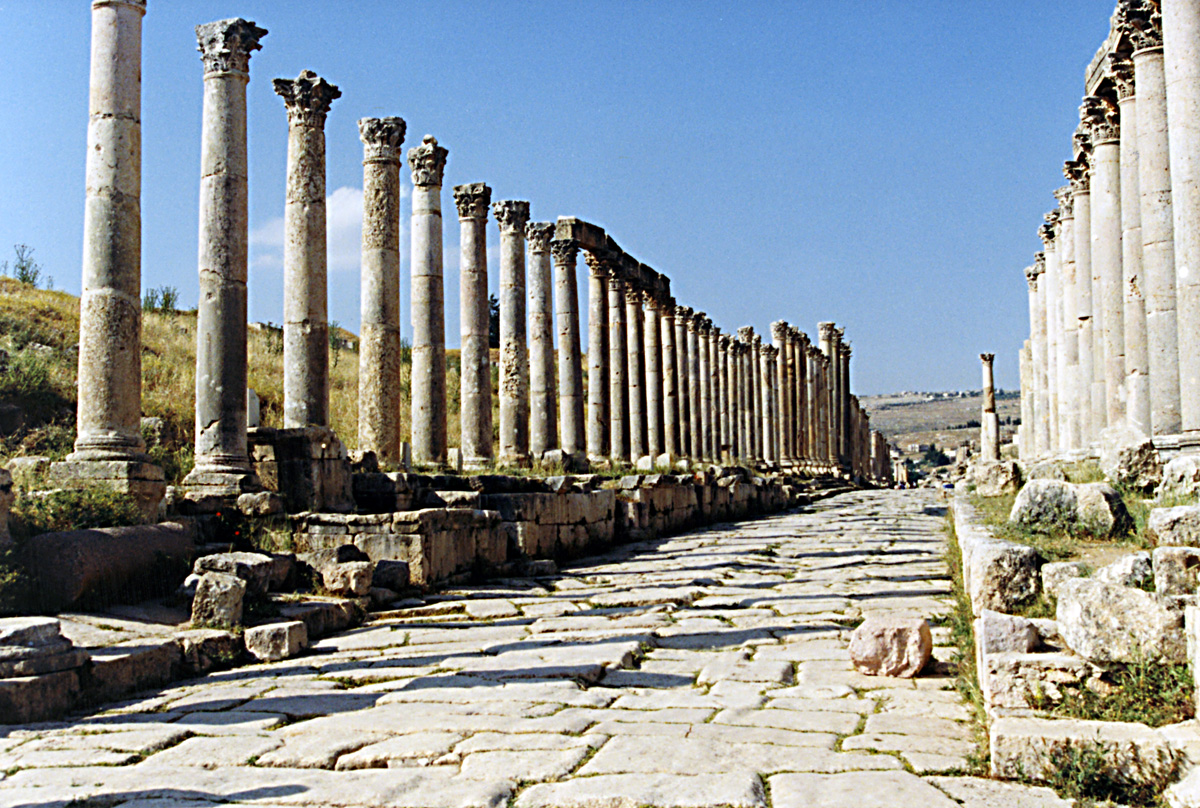
The city's golden age came under Roman rule and the site is now generally acknowledged to be one of the best-preserved Roman provincial towns in the world. Hidden for centuries in sand before being excavated and restored over the past 70 years, Jerash reveals a fine example of the grand, formal provincial Roman urbanism that is found throughout the Middle East, comprising paved and colonnaded streets, soaring hilltop temples, handsome theaters, spacious public squares and plazas, baths, fountains and city walls pierced by towers and gates.

Beneath its external Graeco - Roman veneer, Jerash also preserves a subtle blend of east and west. Its architecture, religion and languages reflect a process by which two powerful cultures meshed and coexisted - The Graeco-Roman world of the Mediterranean basin and the traditions of the Arab Orient.

Wednesday, January 10, 2007

Ajloun

Ajlun (or Ajloun) is just a short journey from Jerash, so it can be combined with an easy day trip from Amman. It is filled with pine forest and olive groves and boasts scores of ancient sites, including watermills, forts and villages, all in the beautiful hills and valleys of northern Jordan.
In Ajlun town the mosque, just southwest of the main roundabout, has a minaret dating back some 600 years.

As the countryside of pine forest and olive groves is good for hiking and is popular with picnicking locals in summer, when the surrounding hills are a few degrees cooler than the rest of Jordan. If possible, visit on a clear day - the views are superb.

While Ajlun Castle (Qal'at Ar-Rabad) is the place that must not be missed, it was built by one of Saladin's generals in 1184 AD to control the iron mines of Ajlun, and to deter the Franks from invading Ajlun. Ajlun Castle dominated the three main routes leading to the Jordan Valley and protected the trade and commercial routes between Jordan and Syria; it became an important link in the defensive chain against the Crusaders, who, unsuccessfully spent decades trying to capture the castle and the nearby village. 

The original castle had four towers, arrow slits incorporated into the thick walls, and was surrounded by a moat averaging 16m in width and up to 15m deep.

In 1215 AD, the Mameluk officer Aibak ibn Abdullah expanded the castle following Usama's death, by adding a new tower in the southeast corner and a bridge that can still be seen decorated with pigeon reliefs.
The castle was conceded in the 13th century to Salah ed-Din Yousef Ibn Ayoub, ruler of Aleppo and Damascus, who restored the northeastern tower. These expansion efforts were interrupted in 1260 AD, when Mongol invaders destroyed the castle, but almost immediately, the Mameluk Sultan Baybars re-conquered and rebuilt the fortress.

Nearby is the Ajlun Nature Reserve, a 13 sq. km protected area of outstanding beauty and diverse wildlife. Within the reserve are two nature trails and chalet-style accommodation. The reserve is managed and maintained by the Royal Society for the Conservation of Nature (RSCN).

Monday, December 11, 2006

Amman - Jordan


The modern city that is built on the sands of time........


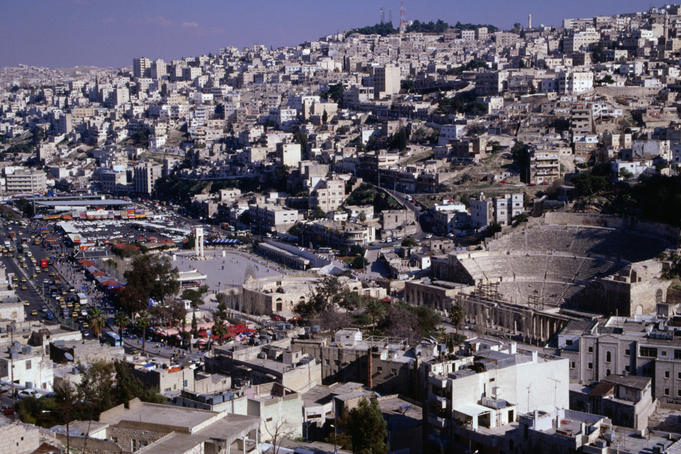
Amman, the capital city of Jordan, is a fascinating city of contrasts, with a unique blend of old and new, ideally situated on a hilly area between the desert and the fertile Jordan Valley. 

In the commercial heart of the city, ultra-modern buildings, hotels, smart restaurants, art galleries and boutiques rub shoulders comfortably with traditional coffee shops and tiny artisans' workshops. Everywhere there is evidence of the city’s much older past.
The downtown area is much older and more traditional with smaller businesses producing and selling everything from fabulous jewellery to everyday household items.

The people of Amman are multicultural, multi-denominational, well-educated and extremely hospitable. They welcome visitors and take pride in showing them around their fascinating and vibrant city. 

Amman  is one of the oldest continuously inhabited cities in the World.  Recent excavations have uncovered homes and towers believed to have been built during the Stone Age with many references to it in the Bible.
Amman was known in the Old Testament as Rabbath-Ammon, the capital of the Ammonites around 1200 BC, it was also referred to as "the City of Waters".

Under the influence of the Roman culture, Philadelphia was reconstructed in typically grand Roman style with colonnaded streets, baths, an Amphitheater, and impressive public buildings.  In the 3rd century BC, the City was renamed Philadelphia (Greek for "The Brotherhood Love") after the Ptolemaic ruler Philadelphus (283-246 BC). 
The City later came under Seleucid as well as Nabataean rule until the Roman General Pompey annexed Syria and made Philadelphia part of the Decapolis League.  Under the influence of the Roman culture, Philadelphia was reconstructed in typically grand Roman style with colonnaded streets, baths, an Amphitheater, and impressive public buildings.

During the Byzantine period, Philadelphia was the seat of a Christian Bishop, and therefore several churches were built.  But As Islam spread northwards from the Arabian Peninsula, the land became part of its domain and its original Semitic name Ammon or Amman was returned to it.

Today Amman has grown rapidly into a modern, thriving metropolis of well over two million people.  It has never rivaled Damascus or Cairo as a grand Islamic city of antiquity. For those arriving from Syria or Egypt it can, depending on your perspective, feel either refreshingly or disappointingly modern and Westernised.

Residents talk openly of two Ammans. Conservative and Islamic in its sympathies, Eastern Amman (which includes downtown) is home to the urbanised poor. And western Amman is a world apart, with leafy residential districts, trendy cafés and bars, and impressive art galleries. It's impossible to gain a full understanding of Amman, or even Jordan, without visiting both areas.

Wednesday, November 8, 2006

How to get to Jordan


Jordan is almost completely land-locked with a small outlet on the Red Sea in the Gulf of Aqaba and a frontage on the Dead Sea. Jordan is bordered by Israel and the West Bank (Palestinian Territories) to the west, by Syria to the north, by Iraq to the east and by Saudi Arabia to the south. 


Getting to Jordan by Plan
Jordan's national airline is Royal Jordanian Airlines and is also served by a number of foreign carriers including BMI, Air France, Air Baltic, Lufthansa, Turkish Airlines, Egypt Air, Emirates, Alitalia and Delta Airlines, plus Low-cost airline such as Air Arabia.

Queen Alia International Airport is Jordan's main airport. It is 35km south of Amman. You should allow 45 minutes to reach the airport from the downtown Amman, approximately 30 minutes from West Amman.

In addition to Queen Alia, Jordan has two other international airports:
  • Marka International Airport in East Amman (serving routes to nearby Middle Eastern countries, as well as internal flights to Aqaba).
  • King Hussein International Airport in Aqaba.

Getting to Jordan by Car

From The Holy Land
You can cross into Jordan by car from Israel, but the border formalities are time-consuming and expensive as Jordanian insurance is required and you will even have to change your license plates.

From Syria 

Long distance taxis operate the route from Damascus to Amman.

This trip should take around 3.5 hours. 

From Iraq

It is theoretically possible to enter Jordan from Iraq depending on your nationality.

From Saudi Arabia

Entry from Saudi Arabia is by bus. Jordan-bound buses can be taken from almost any point in Saudi Arabia or the Gulf.  .As the crossing is the middle of the desert, be absolutely sure that all paper work is in order before attempting the journey, otherwise you might be lost in a maze of Arab bureaucracy. The trip from the border to Amman is 3 hours and up to 20 hours to the either Dammam, Riyadh or Jeddah on the Saudi side. The trip can be uncomfortable but is cheap.


By Bus

Long distance services operate from a number of Middle Eastern destinations including Tel Aviv and Damascus.


By Boat

Jordan can be entered at the port of Aqaba via the Egyptian port of Nuweiba. There are two services, ferry and speedboat. 
Expect to pay around $30 for the ferry or around $60 for the speedboat (both one way) if you are a non-Egyptian national. The slow ferry might take up to 8 hours, and can be a nightmare in bad weather. The speedboat consistently makes the crossing in about an hour, though boarding and disembarking delays can add many hours, especially since there are no fixed hours for departures. 
You cannot buy the ticket in advance and the ticket office does not know the time of departure. You can lose an entire afternoon or even a day waiting for the boat to leave. 
UPDATE: prices have increased. The speedboat is now $70 and the ferry is $60 (+$10 or 50 EGP departure tax from Egypt).

Wednesday, October 18, 2006

Jordan Laisure


Are you seeking for enjoyable activities in Jordan? 

Jordan with its vast history, culture and spectacular land scape, has something for every traveler whether for adventure, relaxation, business or religion.
The popularity of the spa vacation has increased worldwide as many people are adopting healthier lifestyles. For this reason, Jordan has complimented its natural therapeutic sites with first class resorts offering a diverse range of amenities. The goal is to provide its visitors with a unique and relaxing experience catering to all of their health and fitness and beauty needs.


The Dead Sea


img_dead_sea.jpg

At 410m below sea level, the Dead Sea is the lowest place on earth. Jordan’s Dead Sea coast is one of the most spectacular natural and spiritual landscapes in the world, and it remains as enticing to international visitors today as it was to kings, emperors, traders, and prophets in antiquity.
 
The main attraction of the Dead Sea is of course the soothing, abnormally salty water itself. The salt content of the water is 31.5% making the water so buoyant that it is impossible for the visitor to sink. The water also contains 21 minerals including high levels of magnesium, sodium, potassium, and bromine and 12 of these minerals are found in no other body of water in the world. 
A trip to the Dead Sea would not be complete without a visit to one of the first class health spa facilities of the luxury hotels. Here the visitor can enjoy year-round a massage, Dead Sea mud bath, use the excellent fitness facilities, or just spend the day relaxing on their beautiful private beaches.


Hammamat Ma’in / Ma’in Hot Springs


img_hammamat_main.jpg

The wonder of Hammamat Ma’in (Ma’in Hot Springs). Popular with both locals and tourists alike, the springs are located 264m below sea level in one of the most breathtaking desert oases in the world. Thousands of visiting bathers come each year to enjoy the mineral-rich waters of these hyper-thermal waterfalls. These falls originate from winter rainfalls in the highland plains of Jordan and eventually feed the 109 hot and cold springs in the valley. This water is heated to temperatures of up to 63° Celsius by underground lava fissures as it makes its way through the valley before emptying into the Zarqa River.


In and Around Amman
 

img_riding_amman.jpg

Jordan’s modern hotels and resorts are all equipped with spas, fitness centers, swimming pools, and tennis courts. In and around Amman, it is easy to find facilities for track and field sports, horseback riding, cycling, hiking, gliding, golf, and it is possible to go to the impressive Sports City to watch professional football, basketball, handball, and other sports.


Shopping in Amman is amazing as of what you can find, from modern shopping Malls and Boutiques to small shops located in the down town area that sell souvenirs, Arabian rugs and perfumes, Bedouin  and Arabic dresses to all the things that represent Arabia and Jordan. 

Aqaba
 

img_aqaba_beach.jpg

In the south of Jordan, the seaside resort of Aqaba provides the perfect location for rest and relaxation on the shores of the Red Sea. In addition, it offers first-class scuba diving and snorkeling with some of the most beautiful and best-preserved coral reefs in the world. The visitor can also participate in swimming, sailing, windsurfing, water-skiing, or enjoy views of the active marine life on a ride in a glass-bottomed boat. Aqaba is renowned for its warm water and sunny weather and is a delightful destination that can be enjoyed all year round.
  
Wadi Rum


img_wadi_rum.jpg

Wadi Rum offers a truly unique and adventurous experience. The visitors will be amazed by their surroundings amid the stupendous cliffs, canyons, and seemingly endless orange sands as they enter the desert on a camel, horse, or 4x4 jeeps driven by a local Bedouin.  Rock climbing is a popular activity and visitors come from around the world to tackle Wadi Rum’s challenging climbs. Many have described these routes as comparable to those found in the Dolomites.

Wednesday, September 6, 2006

Shopping in Jordan


Every town has a souk (market) selling everything from meat and live chickens, to clothes and jewellery. The gold is usually 18kt or above and there is no charge added for the craftsmanship of items like bangles, chains and earrings.

Tourist-oriented towns offer many handicrafts, including mosaic; mosaic schools train young people to work with the colourful, locally hewn stone.

Another distinctive local craft is ostrich-egg painting: the paint is applied with needle pricks and designs can take weeks to complete.

Other hand-crafted items include sand jars, hand-blown glass and embroidered clothing. Bottled Holy Water from the river Jordan can also be purchased, as can skin-care products made of Dead Sea mud.
 
Shopping hours: 
Sat-Thurs 0930-1330 and 1530-1800; some open as early as 0800 and close at 2000 or even later. Some shops are closed on Friday except for the souks which usually open from 1600.


Nightlife in Jordan

For many Jordanians, an evening's entertainment is going out for a meal. Amman does have nightclubs in the modern districts, mostly attached to 5-star hotels. Many high-end hotels have popular bars. Some cinemas in Amman show English-language films, and there are cultural centres for concerts and exhibitions.
Outside the capital, nightlife is thinner on the ground. The Dead Sea resorts offer a variety of entertainment (not usually open to non-residents), as do the 5-star hotels in Wadi Mousa and Aqaba. In smaller towns, the local coffee shop sometimes doubles as a bar for locals

Wednesday, August 16, 2006

Working in Jordan


Working in Jordan is not really an option for most foreigners passing through, but it is possible for anyone with the right qualifications or interests who has done some planning before leaving home. Your employer in Jordan should be able to deal with the bureaucratic requirements of working permits.


Business hours

Government departments, including most tourist offices, are open from about 8am to 2pm every day apart from Friday - and sometimes they also close on Saturday. Visitor centres keep longer hours. Banks are normally open from 8.30am to 3pm every day but Friday and Saturday. The opening times for post offices vary from one town to another, but tend to be from about 8am to 6pm every day except Friday, when they close about 2pm. Many sights, government departments and banks close earlier in winter.
Almost all major tourist attractions are open every day, normally during daylight hours.
Smaller shops and businesses are open every day from about 9am to 8pm, but some close for a couple of hours in the middle of the afternoon, and some do not open on Thursday afternoon and Friday. The souqs (markets) and street stalls are open every day and, in fact, Friday is often their busiest day.